
Winning a major government or GLC contract in Singapore is rarely about writing the longest proposal or promising the most ambitious outcome. It is about understanding what the buyer actually needs, presenting a compliant and credible response, and making it easy for evaluators to trust your organisation. For many companies, the tender process feels opaque because public sector procurement is highly structured, deadline driven, and unforgiving of incomplete submissions. Yet the companies that succeed often follow a disciplined approach that combines commercial clarity, careful documentation, and a strong grasp of Singapore’s procurement expectations.
For business owners, bid managers, and teams preparing responses to Requests for Proposal, or RFPs, the challenge is not just to answer the questions asked. It is to demonstrate capability, reduce perceived risk, and show that your solution fits the evaluation framework better than competing bids. In Singapore, this matters across ministries, statutory boards, government-linked companies, healthcare clusters, educational institutions, transport operators, and other large organisations that use formal procurement methods to ensure transparency and value. If you understand how evaluators read tenders, what makes a response credible, and how to structure your bid for clarity, you improve your chances of moving from shortlisted bidder to awarded vendor.
Understanding how government and GLC tenders work in Singapore
Public sector procurement in Singapore is guided by formal rules, accountability requirements, and the need to achieve value for money. Government agencies commonly publish opportunities through platforms such as GeBIZ, Singapore’s government electronic business portal, while GLCs and related entities may use their own procurement systems or approved vendor channels. The exact process varies by organisation, but the broad logic is similar. The buyer specifies a requirement, vendors submit responses by a fixed deadline, and the buyer evaluates submissions against stated criteria such as technical merit, price, implementation capability, service quality, and compliance.
One of the most important things to understand is that procurement teams are not only comparing prices. They are assessing whether your company can deliver the service safely, reliably, and according to contract terms. This is especially true for contracts involving data handling, healthcare services, facilities management, engineering, logistics, IT systems, or public-facing operations. A strong proposal therefore needs to show operational readiness, governance, and a realistic implementation plan, not just enthusiasm.
Why compliance matters before persuasion
Many tenders are lost before they are fully evaluated because the submission fails a basic compliance check. Missing forms, unsigned declarations, unclear pricing schedules, or failure to meet mandatory technical requirements can disqualify a bid or severely weaken it. In Singapore’s procurement environment, where buyers are often accountable for process integrity, compliance is not a box-ticking exercise. It is the first signal that the bidder can be trusted to manage detail, follow rules, and deliver consistently.
This means your team should treat the tender pack as a legal and operational document, not only a sales document. Review mandatory requirements carefully, map each one to a named owner, and confirm every attachment is complete before submission. If the buyer asks for certificates, licences, insurance documents, financial statements, or project references, provide exactly what was requested, in the requested format, and with clear supporting context.
Crafting an RFP response that evaluators can trust
A well-written RFP response does more than describe your services. It creates confidence. Evaluators are asking a series of practical questions: Can this bidder deliver? Do they understand our environment? Have they solved similar problems before? Are they priced reasonably? Will they make our lives easier after award? The best responses answer those questions explicitly and with evidence.
Start by mirroring the buyer’s structure. If the RFP is organised into sections such as company background, technical solution, implementation plan, service levels, business continuity, and pricing, respond in the same order. This helps evaluators cross-check your answers quickly and reduces the risk that important information is overlooked. Use clear headings and concise language. Long paragraphs with vague claims can frustrate evaluators who need to compare multiple submissions efficiently.
Show that you understand the buyer’s operational reality
Singapore buyers often operate in high-accountability environments where service interruptions, delays, or data issues can affect large numbers of people. Your response should reflect that reality. For example, if you are bidding for facilities management, explain how your team handles planned maintenance, incident escalation, emergency coverage, and on-site supervision. If you are bidding for an IT or digital services contract, describe your approach to security, service continuity, user support, and change management. If you are bidding for healthcare-related services, show awareness of clinical workflows, patient privacy, infection control requirements, and staff competency requirements where relevant.
Practical examples make your proposal more convincing. Instead of saying you “provide reliable support,” explain your operating model, response structure, and service assurance processes. Instead of claiming you are “experienced,” identify comparable projects, the nature of the client environment, and the outcomes achieved. Buyers are not looking for marketing language. They are looking for proof that you can work inside their constraints.
Use evidence, not exaggerated promises
In high-value tenders, credibility comes from measurable and verifiable information. Include completed projects, referenceable clients, certifications, team qualifications, and process documentation where applicable. If you state that you follow a quality management framework, data protection controls, or safety protocols, connect those statements to actual policies, audits, or certifications held by your organisation. If the contract requires specialised expertise, identify the relevant personnel and their roles clearly.
Avoid promising outcomes that depend on factors outside your control. A bid that claims guaranteed perfection can create more doubt than confidence. It is better to state what your organisation will do consistently, how risks will be managed, and what service levels you are prepared to contractually commit to. Buyers often prefer realistic reliability over ambitious language that is hard to enforce.
Building a winning proposal structure
The strongest tenders are easy to navigate. A reader should be able to move through your response and understand your value proposition without searching for key information. Structure is not just about presentation, it directly affects how evaluators perceive your organisation. A clean, logical proposal suggests maturity and control. A disorganised one suggests risk.
Lead with a clear executive narrative
Your opening should quickly explain why your organisation is the right fit. This is not the place for generic statements about being “passionate” or “customer focused.” Instead, summarise your understanding of the requirement, your relevant experience, and the specific strengths that make your bid credible. If the tender involves nationwide service delivery, mention your footprint and support model. If it requires specialised expertise, emphasise the capabilities that distinguish your team.
An effective executive narrative gives evaluators a framework for the rest of the submission. It tells them what to expect, and it positions your organisation as one that understands both the task and the operating environment.
Map every requirement to a direct response
One of the most practical ways to improve your response is to build a compliance matrix. This is a simple table that lists each requirement from the RFP and shows exactly where your proposal addresses it. For complex bids, this method reduces the chance of omission and helps reviewers confirm that you have answered every mandatory item. It also exposes gaps early, giving your team time to decide whether to fill them, explain them, or withdraw if the requirement is beyond your capability.
For example, if the tender asks for after-hours support, escalation procedures, data handling controls, and a transition plan, ensure each item is addressed in a corresponding section with enough detail to be meaningful. Do not assume the buyer will infer compliance from adjacent text. Make the connection explicit.
Present pricing with precision and context
Price is a major factor in many procurement decisions, but it is rarely the only one. The way you present your pricing can influence how buyers assess your overall professionalism. Make sure the pricing schedule is complete, consistent, and aligned with the scope of work. If assumptions affect your pricing, state them clearly and ensure they do not contradict mandatory requirements.
Where appropriate, explain the commercial logic behind your pricing. For instance, if your solution includes higher upfront implementation effort but lower long-term operating risk, explain that trade-off carefully. Buyers in Singapore often compare not only total cost but also lifecycle cost, resource impact, and service resilience. A thoughtful pricing narrative can help evaluators understand why your offer is good value even if it is not the cheapest.
Managing the bid process like a project
Tendering is a project, and successful teams manage it with the same discipline they would apply to any critical deliverable. This means setting timelines, assigning owners, tracking dependencies, and reviewing submissions well before the deadline. Many organisations lose opportunities not because they lacked capability, but because internal coordination was poor.
A strong bid process usually includes a go or no-go decision, a bid lead, subject matter experts, finance review, legal review, and final sign-off. Early decision-making is important because not every tender is worth pursuing. If the scope does not match your capabilities, if the contract terms are too risky, or if the timeline is unrealistic, it may be wiser to decline and focus on better-fit opportunities. This is a commercial discipline, not a missed opportunity.
Coordinate expertise across departments
Major tenders often require input from operations, legal, finance, HR, technology, procurement, and senior leadership. Each function contributes a different piece of the answer. Operations can explain delivery methods and staffing models. Finance can validate pricing assumptions and working capital impact. Legal can review contractual risk. HR can assess manpower availability. Technology can confirm system compatibility and security controls. When these inputs are integrated properly, the proposal becomes stronger and more believable.
Singapore businesses with lean teams may not have dedicated bid departments, but the same principle applies. Assign clear responsibilities and deadlines, then use one person or a small core team to maintain consistency across the response. A good bid manager does not write every section alone. They coordinate input, enforce standards, and make sure the final package reads as one coherent response.
Prepare for clarification and presentation stages
Some procurement processes include clarification meetings, product demonstrations, site visits, or oral presentations. These stages are not afterthoughts. They are part of the evaluation. Your team should be ready to explain the proposal succinctly, answer questions confidently, and discuss implementation risks honestly. If the buyer asks how your service will work in practice, do not repeat the brochure. Walk through the operating model.
It also helps to anticipate objections. Evaluators may ask about manpower resilience, business continuity, transition support, cyber security, subcontractor management, or service recovery. Prepare clear responses backed by the proposal itself. The more consistent your spoken answers are with your written submission, the more trustworthy you appear.
Common mistakes that weaken RFP submissions
Even well-resourced companies can make avoidable mistakes in competitive tenders. One frequent error is answering the question superficially. Another is using broad claims that are not supported by evidence. Some bids focus too much on company history and too little on the client’s actual needs. Others are technically strong but weak in organisation, making it hard for evaluators to find key information quickly.
Another common problem is failing to tailor the response to the specific buyer. A generic template may save time, but evaluators can usually tell when content has been recycled. In Singapore’s competitive procurement environment, a tailored response signals genuine interest and preparation. It shows that your team has studied the scope, understood the operating context, and taken the time to respond appropriately.
Finally, many bids suffer from internal inconsistency. A solution description may promise one thing, while the pricing table, staffing plan, or implementation timeline suggests another. These inconsistencies create doubt. Before submission, a cross-functional review should check for alignment across all sections, including annexes and supporting documents.
What strong tendering practice looks like over time
Winning more tenders is not just about one strong submission. It is about building a repeatable capability. Organisations that perform well in procurement usually maintain an updated credentials library, standard case studies, a document checklist, pricing templates, and a review process for every bid. They also learn from unsuccessful submissions by identifying what was missing, where the score was weak, and how the next proposal can be improved.
In Singapore, where many major contracts are renewals or long-term relationships, reputation matters. Responsiveness, professionalism, and reliability build confidence over time. If your company wins a contract and performs well, that experience often becomes a future reference point in other procurement exercises. Consistency in delivery can be just as important as competitiveness in bidding.
For companies new to government or GLC procurement, the learning curve can feel steep. But the process becomes far more manageable when approached systematically. Read the tender documents carefully, clarify uncertainties early through the official channels provided, align your response tightly to the evaluation criteria, and ensure every claim can be supported. That combination is usually far more persuasive than flashy language or aggressive promises.
If your organisation is preparing to bid for a major Singapore government or GLC contract, treat the process with the same rigour as a strategic business initiative. The best RFPs do not try to sound impressive in every sentence. They make the buyer’s decision easier by showing compliance, capability, clarity, and control. When those elements come together, your proposal stands out for the right reasons, and that is what wins contracts.
Note: This article provides general information on tendering and procurement strategy in Singapore. Specific tenders may have additional legal, technical, or sector-specific requirements. When necessary, seek advice from qualified procurement, legal, technical, or compliance professionals before submitting a bid.
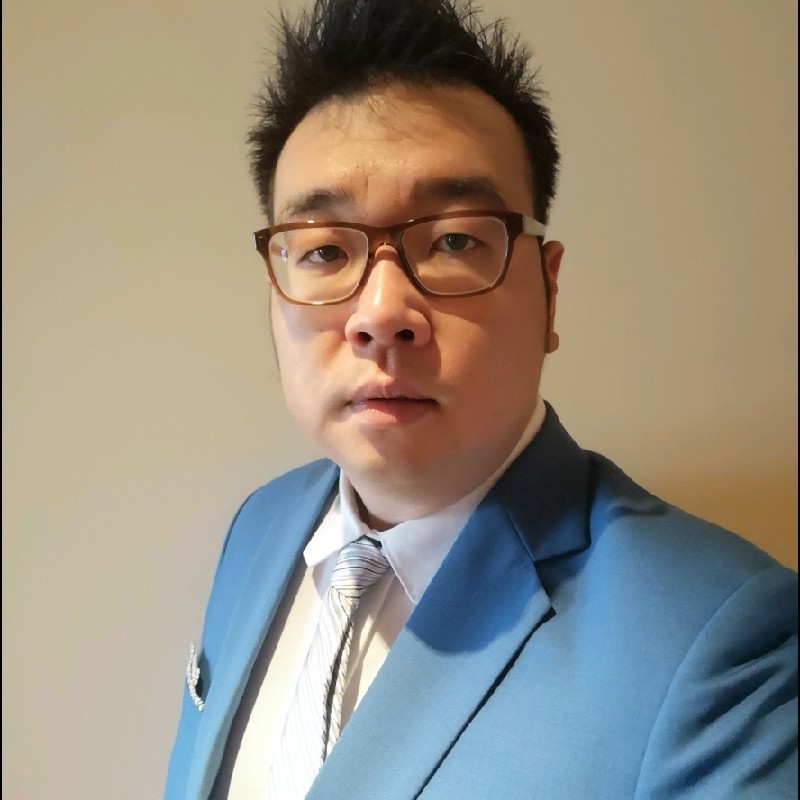
Jeremy Lee is a seasoned digital marketing director and strategist with over two decades of experience in the industry. As the founder of Sotavento Medios, I manage a diverse portfolio of over 50 businesses, helping brands grow through advanced search strategies and digital innovation. My work focuses on bridging the gap between traditional search engine optimisation and the evolving world of AI-driven answer engines.