
In Singapore, a single enterprise deal can involve legal teams, procurement specialists, finance controllers, IT security leads, operational users, and the final decision-maker in the C-suite. That is especially true in Raffles Place, where many of the region’s banks, multinational firms, professional services groups, and regional headquarters make decisions that affect not only local operations but sometimes multiple markets across Asia. High-value enterprise B2B sales is not simply about convincing one person. It is about aligning business priorities, reducing perceived risk, proving commercial value, and building enough trust for a senior leader to say yes.
For sellers working with Singapore enterprises, the sales cycle can feel slow, exacting, and deeply structured. That is not a weakness in the process. It is the process. Enterprise buyers in regulated, reputation-sensitive markets expect vendors to demonstrate reliability, clarity, and operational discipline before any commitment is made. A product may be strong, but if the buyer cannot clearly see how it fits internal governance, legal requirements, implementation effort, data security expectations, and long-term support needs, the deal stalls. Understanding that reality is the first step to improving outcomes in Singapore’s enterprise environment.
The challenge is not just getting a meeting. It is earning sustained attention across multiple stakeholders whose priorities may conflict. Finance may focus on return on investment, operations may care about workflow disruption, IT may scrutinise integration risk, and leadership may want strategic differentiation or cost control. Successful enterprise sellers in Singapore treat this as a strategic orchestration problem, not a one-call closing exercise. The best teams build a repeatable process that respects how large organisations actually buy.
Why enterprise sales cycles in Singapore are unusually complex
Enterprise buying in Singapore is shaped by a few practical realities. First, many organisations operate across regional or global structures, so a local champion in Singapore may still need sign-off from headquarters, regional procurement, or shared service teams. Second, the country’s business culture tends to value precision, responsiveness, and credibility. Vague claims do not travel far in a market where senior stakeholders expect clear rationale, references, and a low tolerance for avoidable mistakes. Third, many sectors have heightened compliance demands, from financial services and healthcare to government-linked organisations and critical infrastructure operators.
These conditions make the buyer journey more intricate than in lower-stakes transactional selling. A high-value enterprise deal is often evaluated through formal procurement stages, risk reviews, technical assessments, proof-of-concept testing, and internal budget planning. A commercial proposal might look attractive on paper, but unless it fits the buyer’s governance framework, it will not progress. This is why sellers need more than persuasive messaging. They need an understanding of how enterprise decisions are made and documented.
Another important factor is the weight of reputation. In Singapore’s tightly networked business community, a poor implementation, weak service response, or unrealistic promise can have lasting consequences. Senior buyers therefore look beyond features and pricing. They ask whether the vendor can deliver reliably, support regional scale, and adapt to the organisation’s internal pace. Trust becomes a commercial asset, not a soft extra.
Mapping the C-suite buying committee and the hidden stakeholders
In enterprise B2B sales, the visible decision-maker is only part of the picture. The actual committee often includes economic buyers, technical evaluators, user champions, procurement leads, legal reviewers, and executive sponsors. Each role sees the deal through a different lens. If a seller only addresses one viewpoint, the proposal may fail even if the initial conversation felt positive.
The C-suite lens is strategic, not operational
Chief executives, chief financial officers, chief operating officers, and other senior leaders usually do not want a product demonstration first. They want to understand business impact. How does this solve a strategic problem? What risk does it reduce? What growth, productivity, resilience, or cost benefit does it create? Senior executives are typically asking whether the investment deserves attention in a crowded priority list. Sellers who bring a feature-heavy pitch without business framing lose momentum quickly.
In Singapore, where many C-suite leaders oversee regional responsibilities, the discussion often includes scale, standardisation, governance, and execution speed. A proposal that works for a single department but cannot support wider deployment may not be compelling enough. Sellers should therefore present not only the immediate use case but also the broader organisational value and the path to expansion if the first phase succeeds.
Procurement and legal teams shape the deal timeline
Procurement is often misunderstood as a blocker, but its role is to manage commercial risk, consistency, and vendor accountability. In enterprise environments, procurement may require competitive comparisons, contract reviews, security questionnaires, and evidence of service levels. Legal teams may scrutinise data protection clauses, indemnities, liability caps, termination terms, and cross-border processing conditions. For Singapore buyers, this can be especially important when personal data, financial information, or regulated workflows are involved.
A seller who waits until the final stage to prepare contract redlines is already behind. Effective teams anticipate procurement and legal questions early. They prepare standard documentation, clarify approval pathways, and avoid surprises that can delay internal sign-off. In enterprise sales, administrative readiness is not an afterthought. It is part of the value proposition.
Technical reviewers and end users influence adoption
Even when the C-suite approves the budget, technical reviewers may reject the solution if integration, security, or maintenance concerns remain unresolved. End users can also influence the decision indirectly by expressing skepticism about usability or workflow disruption. That is why a strong enterprise seller must think beyond the executive meeting and plan for internal adoption. If the solution is difficult to deploy or requires heavy change management, the perceived risk rises.
For Singapore-based companies, where efficiency and operational stability are highly valued, implementation confidence matters as much as commercial promise. Sellers should be ready to explain onboarding steps, technical dependencies, service support, and training structures. This is especially important in sectors that cannot afford long interruptions or inconsistent user uptake.
Building a value case that speaks to Singapore decision-makers
High-value enterprise selling succeeds when the value case is concrete, credible, and relevant to the buyer’s business model. Senior leaders are rarely persuaded by abstract enthusiasm. They respond to outcomes that can be understood in operational and financial terms. In Singapore, that often means showing how the solution improves productivity, reduces duplication, strengthens compliance, supports regional coordination, or improves customer experience.
A strong value case should answer four questions. What business problem does this solve? Why does it matter now? What is the cost of doing nothing? Why is this vendor the right partner for this organisation? If any one of these questions is weak, the deal can lose momentum. The seller’s job is to help the buyer make the internal case with confidence.
Translate features into business outcomes
Features are not meaningless, but they are not the end point. A platform may have advanced analytics, automation, or integration capability, but the buyer wants to know what those features do for the business. For example, rather than saying a system has automated workflow routing, a seller should explain how that reduces manual handoffs, shortens approval times, and helps teams focus on higher-value work. The emphasis should remain on operational impact.
This is particularly important in Singapore, where enterprise buyers often compare multiple credible vendors. If everyone claims to be innovative, the differentiator becomes clarity, implementation realism, and trust. Buyers respect commercial precision. They are more likely to engage when the seller can connect the proposal to measurable organisational pain points, even if the buyer has not yet committed to a quantified ROI model.
Use risk reduction as part of the value proposition
Enterprise decisions are rarely based on upside alone. They are also based on the ability to reduce downside. Senior stakeholders want to know whether the solution will protect service continuity, reduce compliance exposure, improve audit readiness, or prevent operational bottlenecks. In regulated sectors, this can be more persuasive than aspirational language.
Singapore organisations often think in terms of governance and operational assurance, so a vendor that demonstrates implementation control, information security awareness, and support reliability is already ahead. Sellers should make risk mitigation explicit by explaining pilot structures, escalation processes, service response standards, and data handling practices. The goal is to make the buyer feel that adopting the solution is a managed decision, not a leap of faith.
Managing stakeholder alignment across long buying cycles
Long enterprise sales cycles are not simply a waiting game. They are a coordination exercise. Deals slow down when internal stakeholders are not aligned, when a champion lacks internal authority, or when the value case has not been tailored to each audience. That is why disciplined account planning matters. Sellers need to identify who influences the budget, who can veto the proposal, who will use the solution, and who must be reassured before signature.
One useful approach is to map stakeholders by influence and concern. Senior leaders typically care about strategy and financial impact. Functional managers care about workload, fit, and outcomes. Technical teams care about compatibility, security, and support. Procurement cares about fairness, process, and commercial terms. When each group receives a relevant message at the right time, the sales cycle becomes more manageable.
Champion development is essential
A champion is not just a friendly contact. A true champion understands the business problem, believes in the proposed solution, and is willing to advocate internally when the seller is not present. In complex Singapore enterprise deals, the champion often helps navigate internal politics, budget timing, and approval sequence. However, a champion still needs support. If the seller leaves them to build the entire business case alone, the chance of delay increases.
Support should include concise materials, clear implementation plans, answers to likely objections, and a defensible rationale for why the organisation should act now. Sellers who make it easy for champions to sell internally tend to progress faster. The internal pitch is often as important as the external pitch.
Keep communication consistent and specific
Enterprise buyers dislike confusion. If different team members from the vendor give inconsistent answers about pricing, scope, onboarding, or support, trust erodes immediately. Consistency is especially critical in Singapore, where buyers often expect detailed follow-up and prompt response times. A well-run sales process should maintain one source of truth across commercial, technical, and operational discussions.
Specificity also matters. Broad claims about transformation or efficiency sound polished but add little value. Buyers want to understand implementation timelines, account responsibilities, governance checkpoints, and service commitments. The more concrete the information, the easier it becomes for the internal buyer to move the conversation forward.
Practical execution habits that improve deal quality
High-performing enterprise sales teams do not rely on charisma alone. They build habits that reduce friction and increase credibility. These habits are often visible in how they run meetings, manage follow-up, and prepare documentation. In a market like Singapore, where professionalism is closely associated with reliability, the quality of execution can be a deciding factor.
Enter each meeting with a hypothesis
Instead of treating every meeting as a generic discovery call, sellers should enter with a clear hypothesis about the buyer’s likely concern. Is the organisation trying to reduce manual workload? Standardise across business units? Improve governance? Support growth into new markets? A hypothesis helps the seller ask better questions and avoid wasting time.
This approach also signals respect for the buyer’s time. Senior decision-makers appreciate conversations that move beyond surface-level introductions. If the seller demonstrates that they have done proper account research and understands the sector, the discussion becomes more strategic and more useful.
Document decisions and next steps immediately
In enterprise cycles, lost momentum often comes from ambiguity rather than rejection. After each meeting, the seller should confirm what was agreed, what remains open, and what must happen next. Clear follow-up reduces misunderstanding and helps keep multiple stakeholders aligned. This discipline is especially important in Singapore, where buyers may be balancing numerous internal priorities across departments and regions.
A strong follow-up note should include the business issue discussed, any clarified requirements, unresolved concerns, the timeline for next steps, and the owner for each action. This makes the process easier for the buyer and helps the seller maintain control of the cycle without appearing pushy.
Prepare for procurement before procurement starts
One of the most common reasons enterprise deals slip is late-stage administrative friction. Contract redlines, vendor registration, security assessments, and approval paperwork can take time. Sellers who prepare early can avoid unnecessary delay. This means having clean documentation, clear commercial terms, a realistic implementation plan, and a basic understanding of the buyer’s internal process.
In Singapore, where many enterprises are highly process-driven, this preparation is not optional. It reflects operational maturity. A vendor that is organised at the outset tends to feel less risky than one that improvises near the finish line.
Turning a complex cycle into a reliable commercial system
The most effective enterprise sellers do not treat each deal as a one-off battle. They create a system that can be repeated and improved. That system includes account qualification, stakeholder mapping, executive messaging, value-case development, procurement readiness, and post-meeting discipline. It also includes patience. Not every qualified opportunity closes quickly, and forcing premature urgency can damage trust.
For Singapore-based businesses, this disciplined approach fits the broader commercial culture. Buyers expect professionalism, evidence, and a partner who understands the demands of scale, governance, and execution. Sellers who internalise this reality can move beyond transactional tactics and build relationships that support long-term revenue. In practice, that means respecting the internal complexity of the buyer, speaking the language of business outcomes, and making every interaction easier for the decision-maker.
For readers in Singapore considering enterprise sales strategies, the key takeaway is simple. The C-suite does not buy enthusiasm. It buys confidence, alignment, and credible value. If your process can consistently demonstrate those three elements, you improve your chances of winning high-value deals in one of Asia’s most discerning business markets. If a deal involves regulated data, cross-border processing, or contractual risk, seek appropriate legal, compliance, or subject-matter review before committing to any final terms.
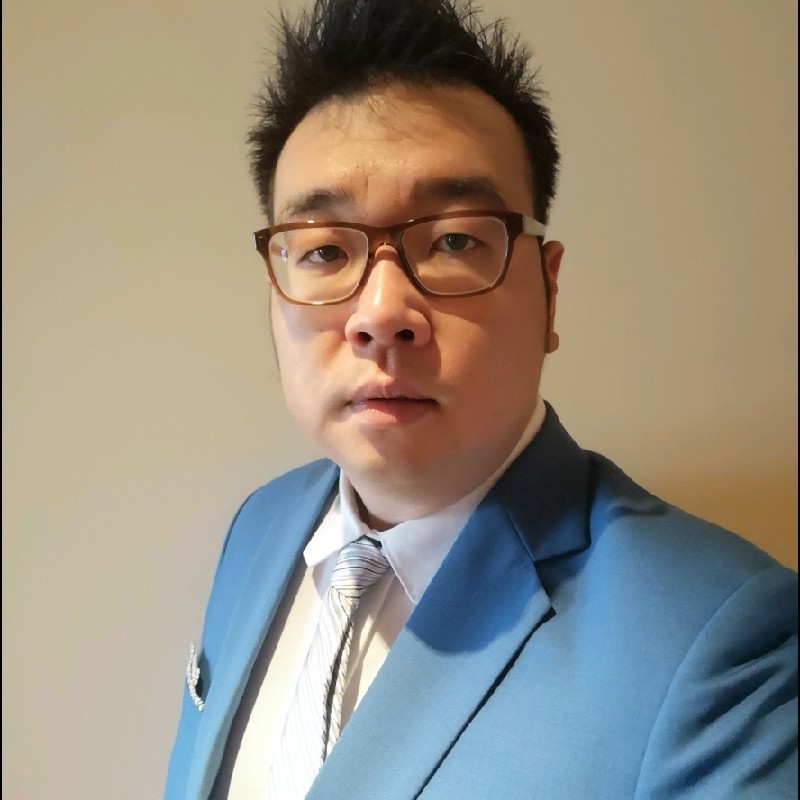
Jeremy Lee is a seasoned digital marketing director and strategist with over two decades of experience in the industry. As the founder of Sotavento Medios, I manage a diverse portfolio of over 50 businesses, helping brands grow through advanced search strategies and digital innovation. My work focuses on bridging the gap between traditional search engine optimisation and the evolving world of AI-driven answer engines.